
Identified Civil War Mess Plate, Tintype, & Documents George N. Harvey, 111th & 4th New York Infantry
$850.00
Description
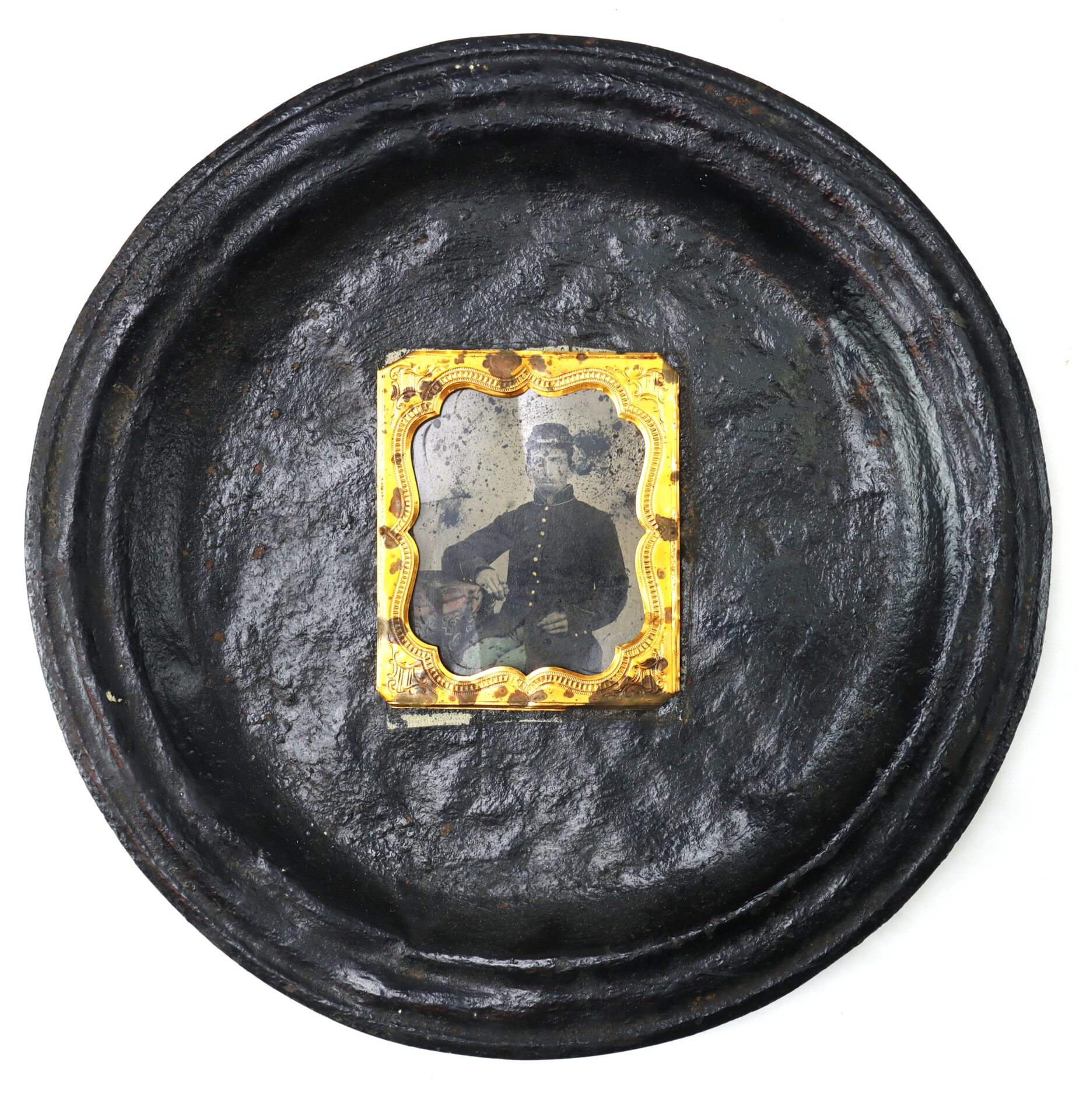
Identified Civil War Mess Plate, Tintype, & Documents
George N. Harvey, 111th & 4th New York Infantry
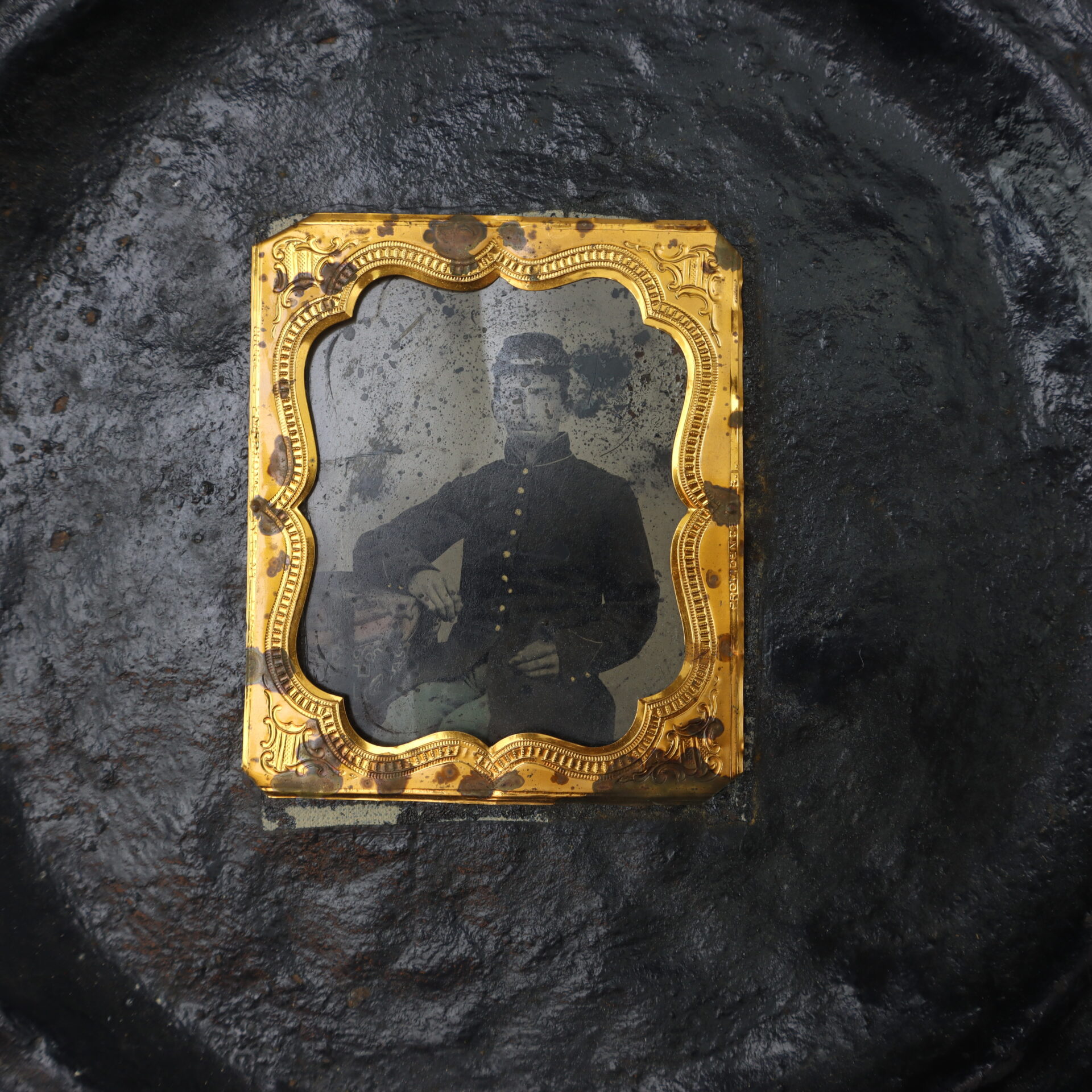
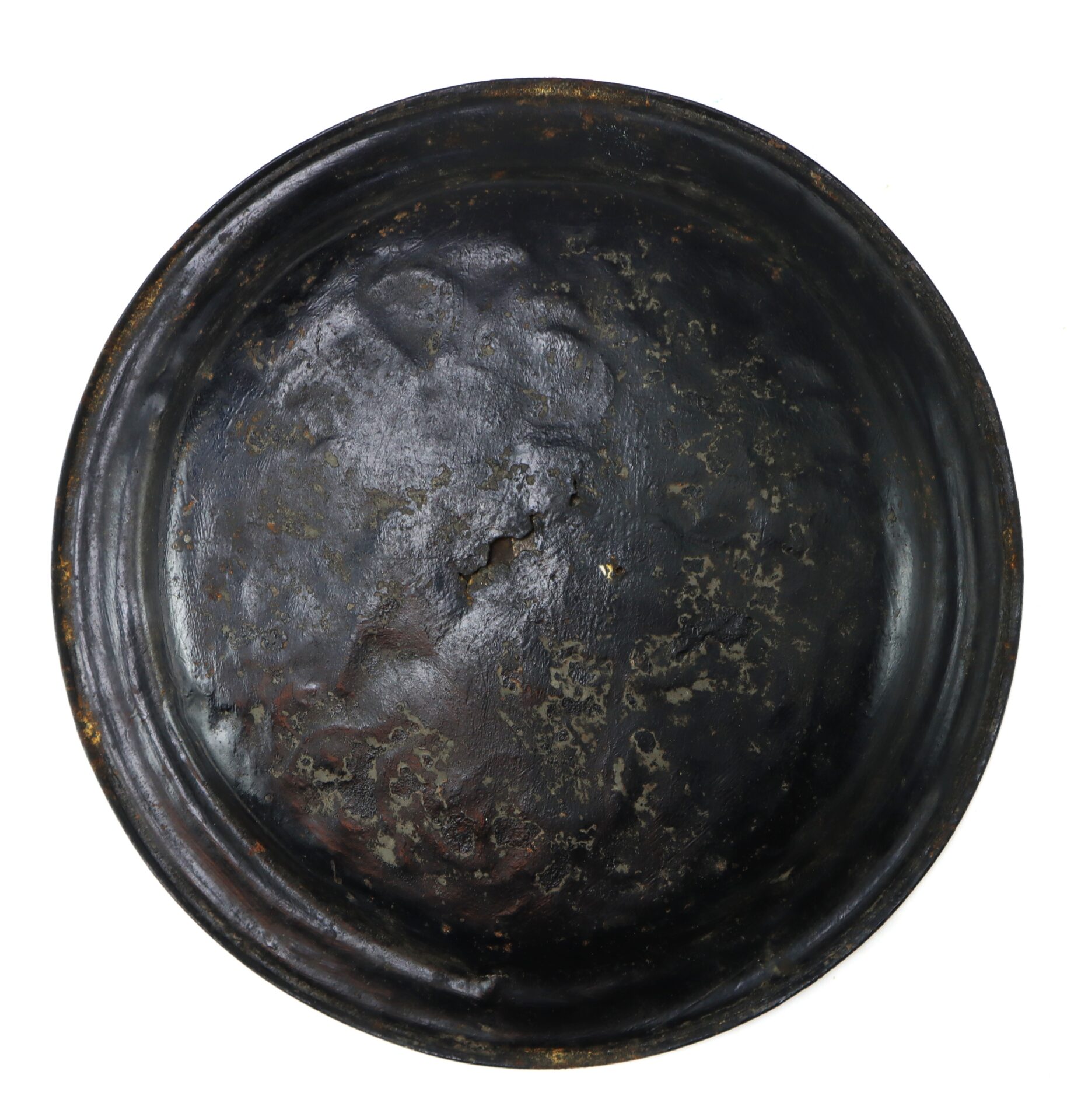
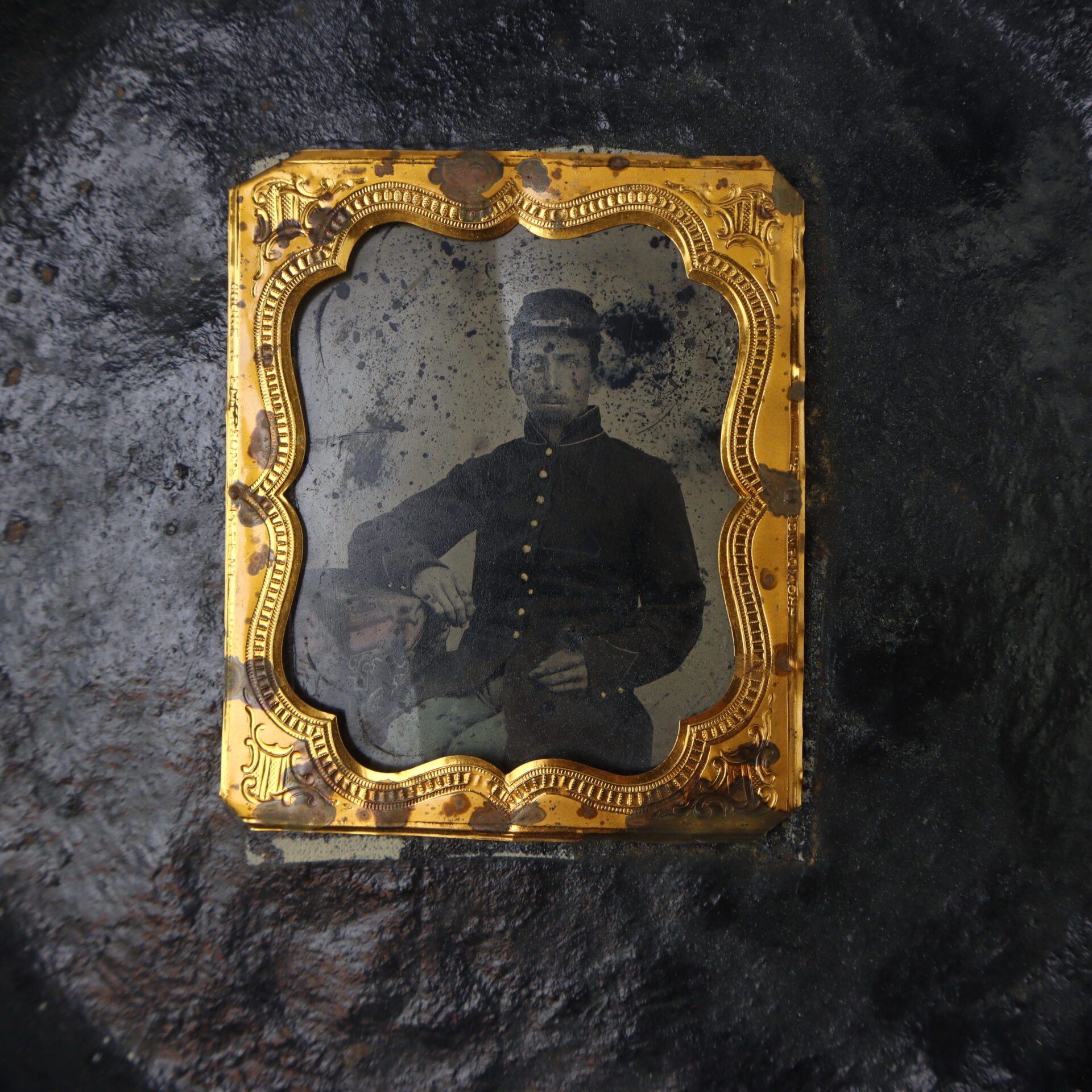
Civil War regulation tin mess plate later painted black during the veteran era for commemorative display, with the original tintype photograph of Private George N. Harvey mounted in the center and framed by decorative brass matting. The presentation suggests a veteran’s museum display.
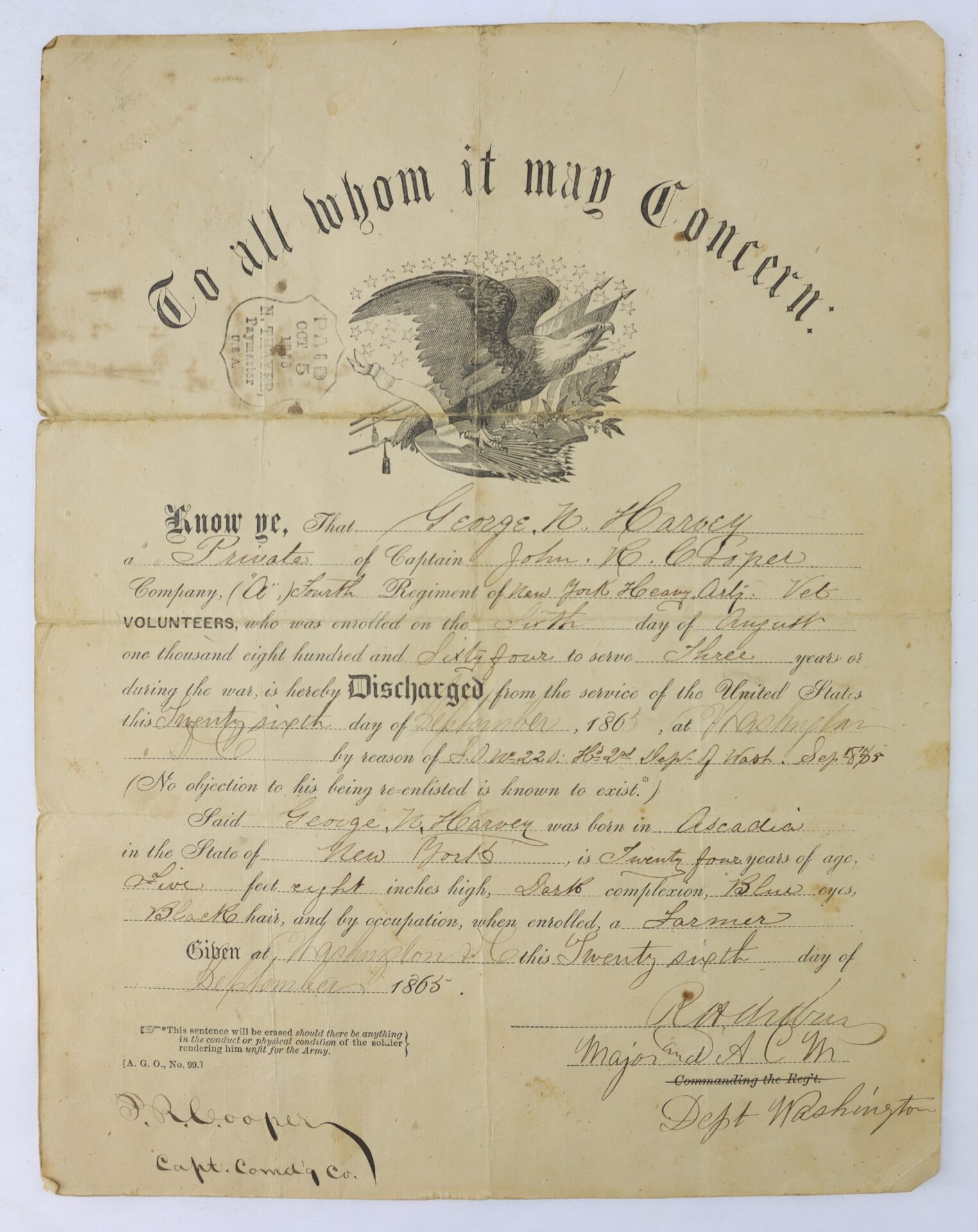
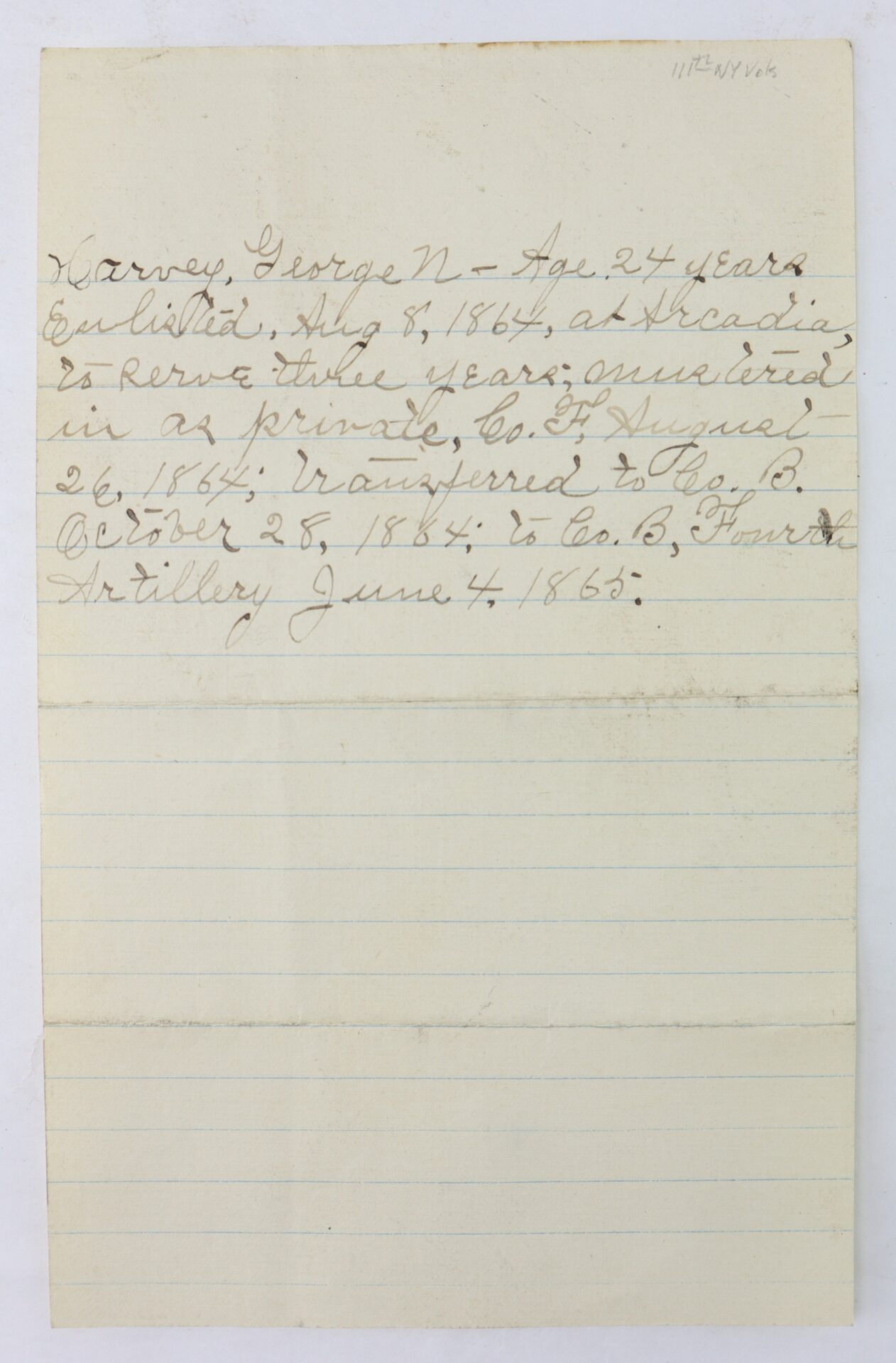
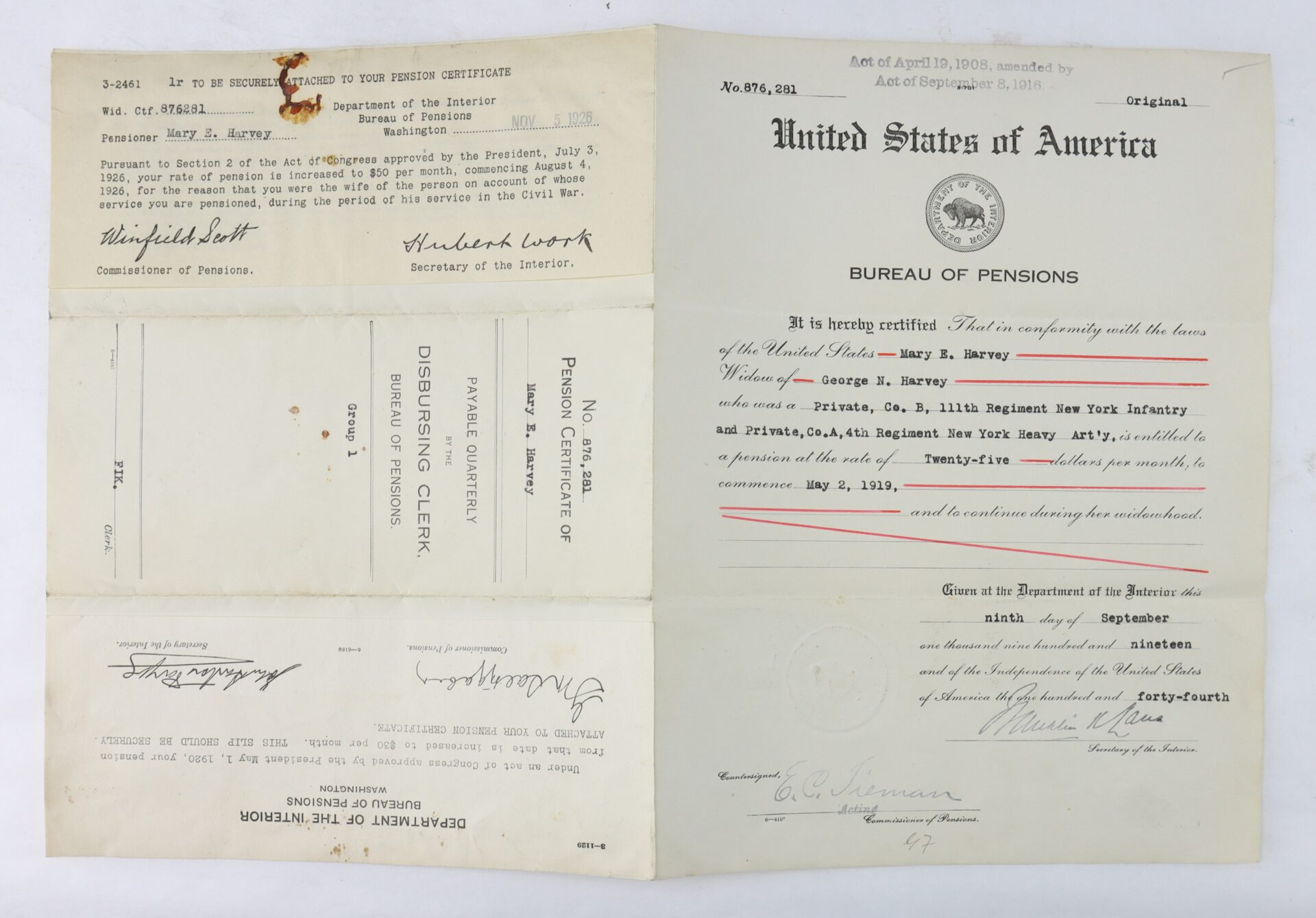
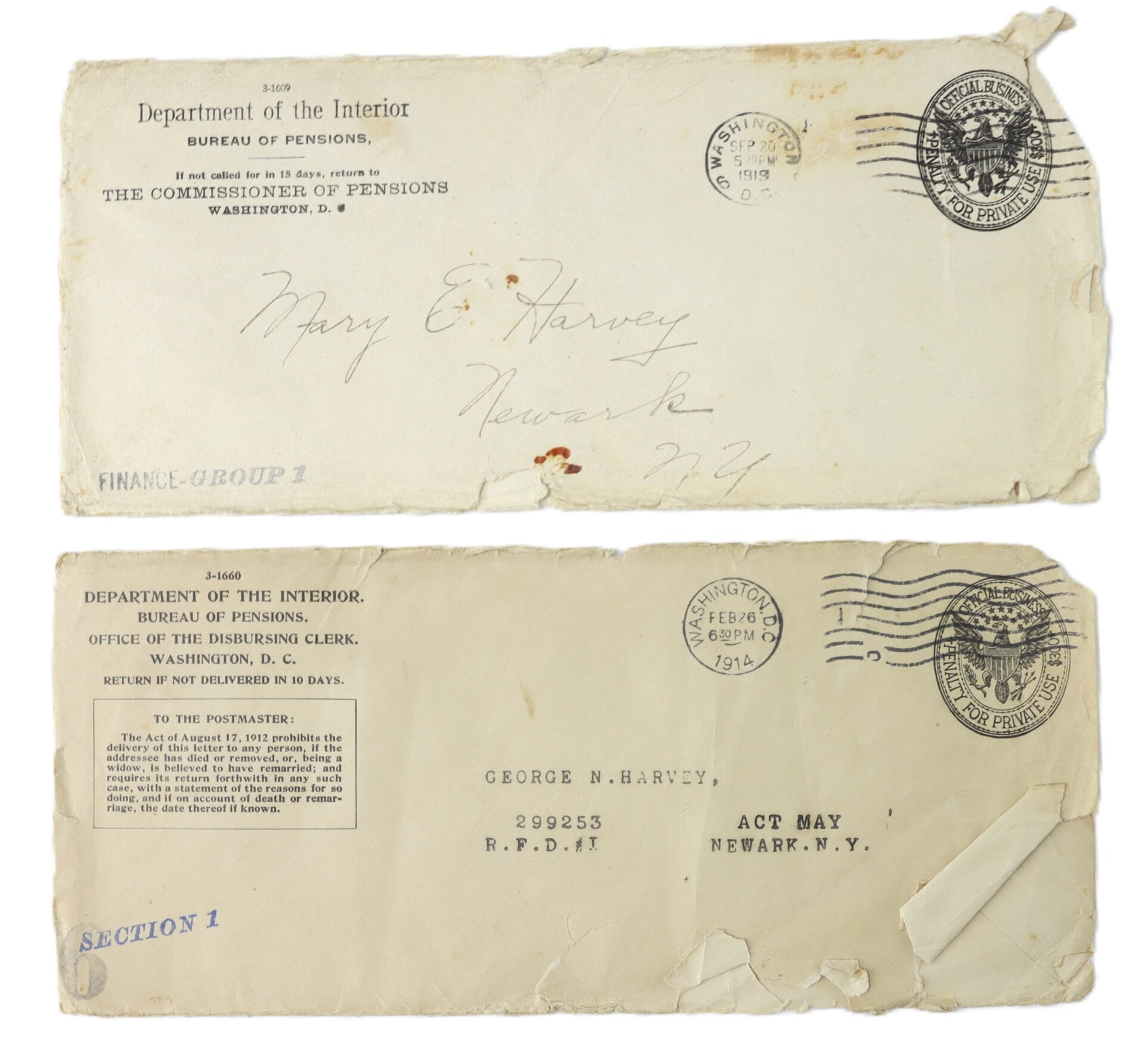
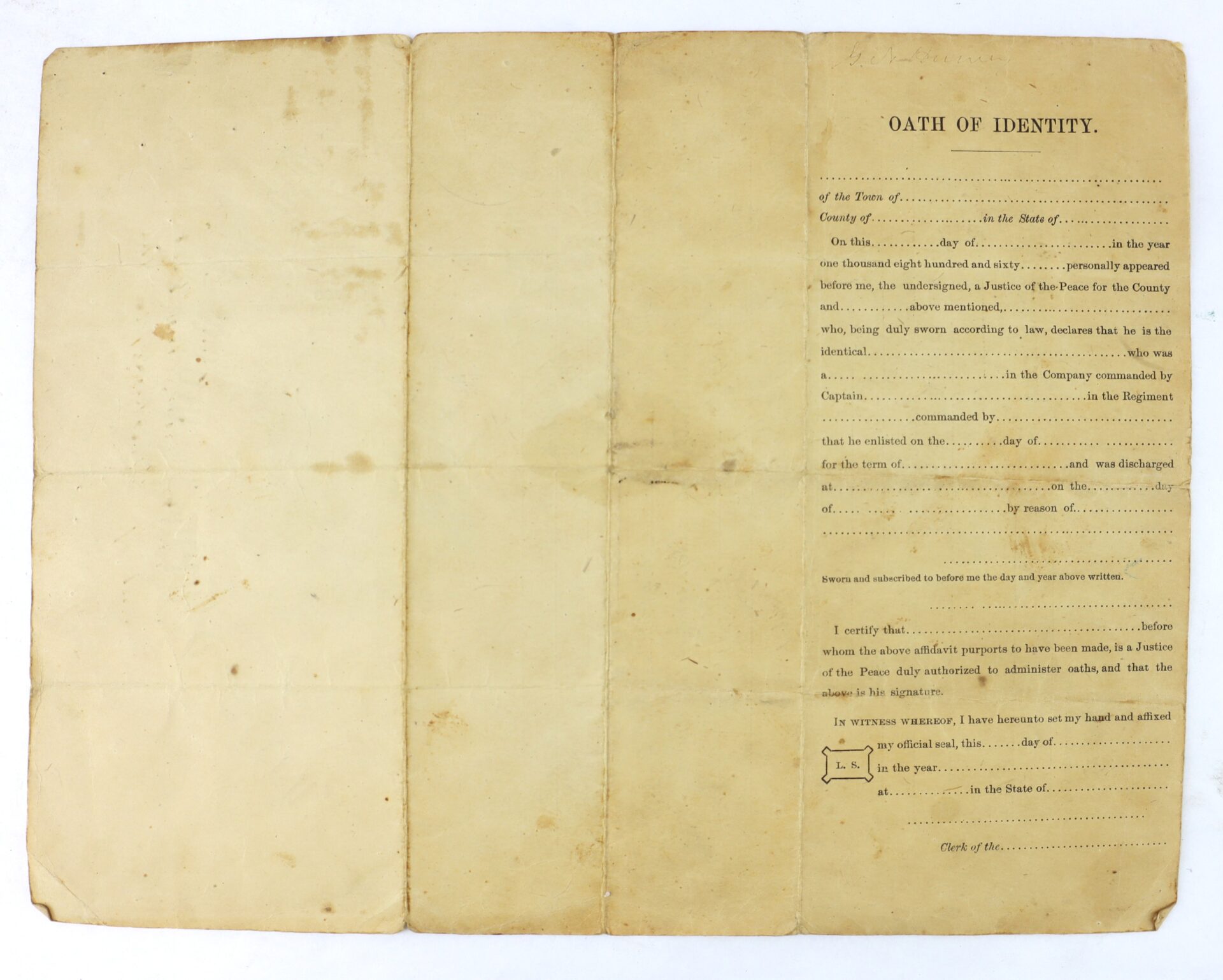
Accompanying the plate is Harvey’s original eagle masthead discharge, Handwritten Service History of Private George N. Harvey and Original pension papers.
111th New York Infantry & 4th New York Infantry
August 1864 – June 1865
George N. Harvey enlisted on August 8, 1864, at Arcadia, New York, at twenty-four years of age, and mustered into Company F of the 111th New York Infantry on August 26, 1864. By the time Harvey joined its ranks, the 111th was a seasoned regiment of the VI Corps, Army of the Potomac, hardened by years of campaigning and deeply engaged in the Petersburg Campaign.
Harvey entered the war at its most grueling phase. The regiment was entrenched before Petersburg, locked in constant siege warfare under General Grant’s relentless pressure on Lee’s army. Rather than the sweeping maneuvers of earlier campaigns, this was a soldier’s war of trenches — daily exposure to sharpshooters, artillery fire, picket duty, and exhausting labor constructing and repairing earthworks. Casualties came steadily from bullets, shells, and disease. It was into this unforgiving environment that Harvey was initiated as a soldier.
On October 28, 1864, he was transferred within the regiment from Company F to Company B, likely reflecting battlefield losses and company consolidation common during the campaign. That autumn, elements of the VI Corps were active in the Shenandoah Valley under General Philip Sheridan. The 111th New York participated in the climactic operations that shattered Confederate resistance in the Valley, including the dramatic Battle of Cedar Creek in October 1864 — a desperate fight that began with a surprise Confederate assault at dawn and ended in a sweeping Union counterattack. If present, Harvey would have witnessed one of the most chaotic and decisive engagements of the war’s final year.
Through the winter of 1864–1865, the regiment returned to the Petersburg lines. Conditions were harsh. Soldiers endured freezing weather, short rations, and the constant tension of enemy fire across narrow no-man’s-land. Months of stalemate tested morale as much as endurance.
The defining moment of Harvey’s service came in April 1865. On April 2, the VI Corps spearheaded the massive assault that broke the Confederate lines at Petersburg. In fierce fighting, Union troops stormed entrenched earthworks, collapsing Lee’s defensive position and forcing the evacuation of Richmond. The breakthrough triggered the final campaign that ended at Appomattox Court House. Harvey would have marched in the relentless pursuit westward, part of the tightening ring that compelled Lee’s surrender on April 9, 1865 — effectively ending the Civil War.
On June 4, 1865, Harvey transferred from the 111th New York into Company B of the 4th New York Infantry. By this stage of the war, regiments were being consolidated for occupation and demobilization duty. His final period of service likely involved post-war garrison responsibilities as the Union army transitioned from combat to peace.
In less than a year of service, George N. Harvey experienced the war at its climax — the grinding siege of Petersburg, the dramatic breakthrough of April 1865, and the final surrender of the Army of Northern Virginia. Though a late-war enlistee, his service placed him squarely in the decisive campaigns that brought the conflict to its conclusion.
Inventory Number: IDE 318

Related products
-

Exceptional Sixth-Plate Tintype of African American Soldier – 14th Rhode Island Heavy Artillery (Colored) Identified Regiment – Rare and Historically Important
$3,200.00 Add to cart -
Civil War Tin Document Tube
$125.00 Add to cart -
Cased Shoehorn and Button Hook of William “Extra Billy” Smith
$550.00 Add to cart -
English Pistol with Brass Barrel and Grotesque Mask Butt Cap
$895.00 Add to cart


Reviews
There are no reviews yet.